
In healthcare, every second counts. That’s why effective healthcare communications platform is essential—it ensures that vital patient information reaches the right provider quickly and accurately. By integrating the right methods, systems, and workflows, care teams can collaborate seamlessly and respond in real time.
Communication underpins nearly every aspect of clinical operations, but its greatest impact lies in delivering high-quality patient care. It also drives efficient workflows, faster response times, and stronger team morale. As you’ll agree that secure care-team communication across locations is non-negotiable.
In this article, we’ll explore the core elements of building effective clinical communication workflows, examine the challenges and rewards, and share actionable strategies.
What are the most common communication challenges in a medical practice?
The single biggest barrier to efficient healthcare delivery is fragmented communication. Critical patient information often gets lost across a chaotic mix of pages, calls, emails, and hallway conversations. When departments rely on different tools and workflows, it becomes harder to identify the right contact, escalate urgent issues, or coordinate care across the organization. That’s why today’s clinics need a robust technology based solution to simplify clinician communications and reduce call-outs.
Structured Growth: How to Manage Multi-Location Clinics with Efficiency
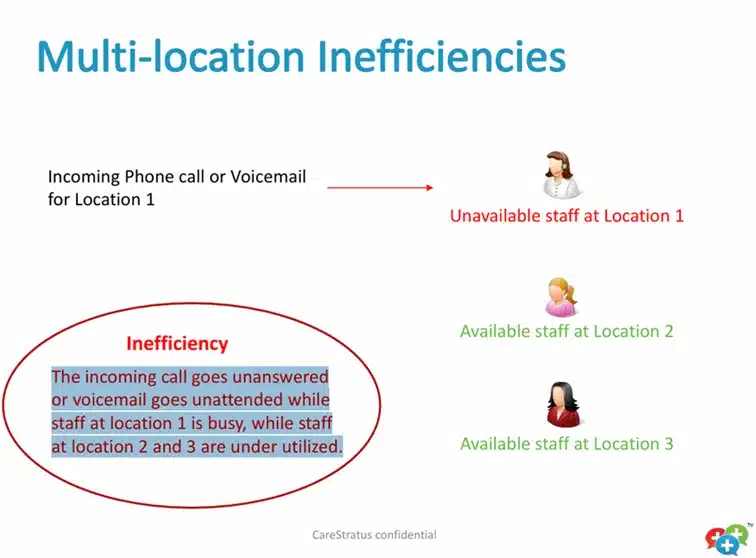
Expanding your practice across multiple locations is a significant achievement—but it also brings new operational challenges. From coordinating staff to standardizing patient care and maintaining oversight across branches, multi-site management demands more than just replicating your original clinic model.
To succeed, healthcare leaders must adopt a cloud-based, secure clinical communication platform that streamlines workflows and ensures consistent care delivery. A robust healthcare platform helps bridge the gap between physicians, nurses, and admin staff—enabling real-time collaboration, faster decision-making, and improved patient outcomes.
Better Workflows Start with an All-in-One Healthcare Communications Platform
To overcome fragmentation and streamline operations, the solution is a truly comprehensive healthcare communications platform. Choose an all-in-one system that unifies essential functions into a single, centralized dashboard:
- Automated Answering & On-Call Scheduling: Ensure every call is handled efficiently and instantly routed to the correct on-call provider.
- Secure Two-Way Patient Texting: Facilitate internal team collaboration and direct, secure patient texting.
- Patient Engagement Tools: Automate patient reminders, PREP instructions and recalls to reduce cancellations and no-shows.
- Centralized Reporting: Gain clear performance oversight across locations from a single dashboard at the departmental and individual level.
Key Functions of Clinical Communication and Collaboration (CC&C) Platforms
Clinical Communication and Collaboration (CC&C) platform, such as Doctoc centralizes and automates essential workflows, monitor and escalate urgent communications in real-time, acting as the operational backbone for secure, high-speed care delivery.
These platforms are designed to:
- Secure & Compliant Communication: Provide HIPAA-compliant text, voice and video-call features, including the ability to safely share images and videos.
- Improved Access with Unified Dashboard: Every action items such as calls, faxes, voicemails and texts, are now easily accessible using Desktop, Mobile and VoIP phones
- Trackable Work items: Create trackable work-items for voicemails for front and back office staff with timestamped records, including how that was handled
- Intelligent Routing: Automatically escalate and route messages or calls based on the user’s current role, on-call schedule, or availability.
- Mobile Schedule Management: Allow clinicians to view and update their call schedules directly from their smartphones.
- Instant Critical Alerts: Deliver immediate notifications for vital information, such as critical lab results and time-sensitive team alerts (like STEMI).
- Visibility & Accountability: Facilitate auditing with detailed time and date stamps to track when communications are sent, delivered, and read.
Cost-benefit of investing in an enterprise-grade clinical communication platform
An advanced care team communication and collaboration toolleads to faster, safer patient care. When providers are instantly connected, they spend less time chasing updates and more time focused on treatment.
Key outcomes include:
- Faster workflows: Real-time coordination speeds up decisions and boosts team efficiency.
- Lower admin load: Less time on non-clinical tasks reduces burnout and frees up care time.
- Higher staff morale: Smooth operations improve job satisfaction, retention, and patient safety.
An Efficient patient-provider communication system isn’t just operational—it’s essential to better care and healthier teams.
Discover how Doctoc can support your health system — schedule a demo or contact us today.