
Running a successful medical practice requires far more than providing excellent patient care. Behind every appointment, prescription refill, referral, and follow-up is a complex web of communication that keeps the office moving.
Unfortunately, many healthcare organizations still rely on disconnected systems for phone calls, texting, faxing, telehealth, voicemail, and patient surveys. This fragmented approach creates unnecessary administrative work, increases the chance of communication errors, and slows down patient service.
As patient expectations continue to rise, practices need smarter solutions that simplify communication rather than complicate it. An integrated healthcare communication platform brings all patient interactions into a single secure, easy-to-manage system, helping practices improve efficiency and deliver a better patient experience. For busy medical offices, having one platform that handles all communication isn’t just convenient; it can transform daily operations.
The Challenges of Fragmented Communication
Many healthcare practices have accumulated communication tools over time. One application handles texting. Another manages phone calls. Faxes arrive through a separate portal. Video visits require yet another application, and patient satisfaction surveys are sent through different software altogether.
While each solution may perform its individual task well, switching between multiple platforms creates several problems:
- Staff spend valuable time logging into different systems
- Important patient information can become scattered
- Communication history is difficult to track
- Training new employees becomes more complicated
- Reporting and analytics are incomplete
These inefficiencies add up quickly. Every extra click, login, or application switch reduces productivity and takes staff away from what matters most—serving patients.
What Is an Integrated Healthcare Communication Platform?
An integrated healthcare communication platform combines multiple communication channels into one secure application. Rather than juggling several software programs throughout the day, staff can manage patient communication from a single dashboard.
Instead of asking:
- “Did they leave a voicemail?”
- “Was a text already sent?”
- “Which fax portal has that referral?”
- “What app do we use for telehealth?”
Everything is available in one location. This streamlined workflow eliminates confusion while making communication faster and more organized.
One Screen for Calls and Text Messages
One of the biggest productivity improvements comes from integrating phone calls and text messaging. In many offices, staff answer calls through one phone system while sending texts from an entirely different application. Switching back and forth interrupts workflow and wastes time.
With an integrated system like DocToc, phone calls and text conversations work together seamlessly. Staff can call a patient and immediately continue the conversation through secure messaging, all from the same screen.
For example:
A patient misses a call about lab results. Instead of leaving a voicemail and opening another application to send a follow-up text, the staff member can send a secure text message directly from the same interface. This creates faster communication while reducing unnecessary steps.
One Place for Voicemail, Texts, and Faxes
Medical offices receive hundreds of communications every day. Between incoming faxes, patient texts, voicemail messages, referrals, and provider communications, information can easily become buried when each channel is managed separately.
An integrated communication platform centralizes voicemail, text messaging, digital faxing, and phone activity. This way, instead of checking three or four different systems throughout the day, staff have one organized inbox for patient communications, reducing missed messages, speeding up response times, and helping everyone stay on the same page.
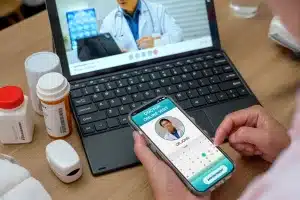
Built-In HIPAA-Compliant Video Conferencing
Telehealth has become an essential part of modern healthcare, but many practices still rely on separate video conferencing applications. Managing another login, scheduling platform, or software subscription adds unnecessary complexity.
An integrated communication platform includes HIPAA-compliant video conferencing directly within the application. This provides several advantages:
- Easier appointment scheduling
- Secure virtual patient visits
- No need to switch applications
- Better documentation of communication history
Integrated video conferencing is also valuable for virtual medical assistants acting as remote scribes, allowing providers to collaborate securely without adding additional software to their workflow. By keeping telehealth within the same communication platform, practices simplify operations while maintaining compliance.
Better Data Through Unified Analytics
Improving efficiency starts with understanding how your practice communicates. When communication happens across multiple systems, reporting becomes incomplete. One platform may show call volume while another tracks texting activity, making it difficult to understand overall performance.
An integrated platform provides analytics across every communication channel, including:
- Phone calls
- Text messaging
- Fax activity
- Video conferencing
- On-call communications
With comprehensive reporting, practice managers can identify trends such as:
- Peak call times
- Missed calls
- Response times
- Communication volume
- Staff workload
- Patient engagement
These insights help practices make informed staffing decisions and continuously improve patient service.
Patient Satisfaction Surveys Without Additional Software
Understanding the patient experience is essential for long-term growth. Many healthcare organizations purchase separate survey platforms to gather patient feedback after appointments.
An integrated communication platform removes that extra step by allowing patient satisfaction surveys to be sent directly through the same software used for everyday communications. Because surveys are built into the workflow, gathering valuable feedback becomes effortless rather than another administrative task.
This offers several advantages:
- Easier survey distribution
- Higher response rates
- Less administrative work
- Better reporting
- Consistent patient engagement
Improved Staff Productivity
Administrative staff often spend more time managing communication systems than communicating with patients. An integrated solution reduces repetitive tasks by simplifying workflows. When everyday tasks become simpler, staff can dedicate more attention to delivering exceptional patient care.
Rather than learning multiple interfaces and switching between programs all day, staff work from one familiar system.
This leads to:
- Faster onboarding for new employees
- Fewer communication errors
- Better collaboration
- Reduced administrative burden
- Increased productivity
Better Patient Experiences
Patients don’t think about the software behind your office; they simply expect timely, convenient communication. Integrated patient communication systems make that possible.
Patients benefit from:
- Faster responses
- Consistent communication
- Easier appointment coordination
- Convenient text messaging
- Secure virtual visits
- Timely follow-ups
When communication is smooth and reliable, patients are more likely to feel valued and remain loyal to your practice. Strong communication also reduces frustration caused by missed calls, delayed responses, or inconsistent messaging.
Support Growth Without Adding Complexity
As practices grow, communication naturally becomes more demanding. More providers, additional locations, increased patient volume, and expanded services all place greater strain on administrative teams.
Adding separate software for every new need only increases complexity. An integrated communication platform scales with your practice by keeping all communication channels connected within a single secure environment.
Whether your office is managing routine appointment reminders, coordinating after-hours on-call communications, conducting virtual visits, or collecting patient feedback, a single centralized platform keeps everything organized and efficient.
Why Integration Matters More Than Ever
Healthcare continues to evolve, and patient expectations are evolving with it. Patients expect convenient communication options, quick responses, and seamless digital experiences.
Practices that rely on disconnected tools often struggle to keep pace. An integrated communication solution helps eliminate unnecessary administrative work while improving consistency across every patient interaction, allowing medical offices to streamline operations without sacrificing quality or compliance.
Solutions like DocToc achieve this through intelligent digital communication technology, rather than live operators. The result is a more efficient workflow, greater visibility into practice communications, and a better experience for both staff and patients.
Improve the Communication and Efficiency of Your Practice with DocToc
Managing patient communication shouldn’t require your staff to juggle multiple applications, switch between systems, or waste valuable time searching for information. As healthcare practices face growing patient expectations and increasing administrative demands, having a single, integrated communication platform is no longer a luxury—it’s a competitive advantage.
DocToc brings together secure calling, HIPAA-compliant texting, digital faxing, voicemail, telehealth, patient satisfaction surveys, analytics, and on-call communication into one intuitive platform. By centralizing every patient interaction, your team can work more efficiently, reduce communication gaps, and spend more time focused on delivering exceptional care.
Contact us today to schedule a personalized demo and discover how an integrated healthcare communication platform can improve efficiency, enhance the patient experience, and support your practice’s future growth.