
Healthcare organizations are under constant pressure to improve communication while maintaining strict patient privacy standards. Patients expect quick responses, seamless scheduling, and easy access to their providers, while medical offices need reliable systems that support efficiency and compliance. Traditional phone systems often struggle to meet these demands, which is why many practices are turning to Voice over Internet Protocol (VoIP) technology.
A VoIP medical office system uses internet connectivity rather than traditional phone lines to manage voice communications. Modern healthcare VoIP systems offer advanced features such as call routing, voicemail-to-email, remote access, and integration capabilities that can help practices streamline operations and enhance the patient experience.
Before making the switch, however, healthcare providers should understand both the advantages and potential risks associated with VoIP technology. Here’s what medical practices need to know when evaluating a cloud phone system for healthcare.
What is VoIP?
Voice over Internet Protocol, commonly known as VoIP, is a communication technology that allows phone calls to be transmitted over the internet rather than through conventional telephone networks. Unlike traditional landlines, VoIP systems operate through software and cloud-based infrastructure, giving healthcare organizations greater flexibility and functionality.
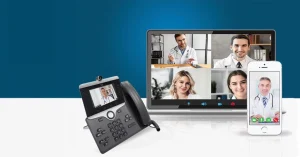
Staff members can answer calls from office phones, desktop applications, mobile devices, or remote workstations while maintaining a professional and consistent patient experience. For healthcare practices that handle high call volumes, appointment scheduling, after-hours inquiries, and patient follow-ups, VoIP can provide a foundation for more efficient communication.
Benefits of VoIP for Healthcare Practices
Improved Accessibility and Flexibility
One of the most significant advantages of healthcare VoIP systems is their flexibility. Medical offices often need to manage communications across multiple locations, remote staff members, answering services, and on-call providers.
A cloud phone system for healthcare allows authorized team members to access calls and messages from virtually anywhere with a secure internet connection.
This flexibility is particularly valuable for:
- Multi-location practices
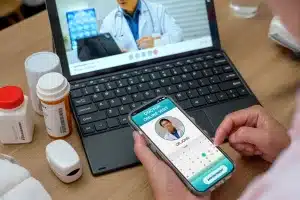
- Telehealth providers
- Remote administrative staff
- On-call physicians
- After-hours support teams
With the right setup, patient calls can be routed quickly to the appropriate person without requiring complex phone transfers or multiple phone lines.
Enhanced Patient Experience
Patients value prompt, professional communication. Long hold times, missed calls, and confusing phone menus can negatively impact patient satisfaction. Modern VoIP medical office systems often include features such as:
- Intelligent call routing
- Automated attendants
- Call queues
- Voicemail transcription
- Appointment reminder capabilities
- Call forwarding
These tools help ensure patients reach the right department faster and receive timely assistance when they need it. When combined with a professional medical answering service, VoIP technology can help practices maintain exceptional service levels during busy periods, after hours, and during emergencies.
Scalability for Growing Practices
Healthcare organizations frequently evolve through expansion, mergers, new providers, or additional office locations. Traditional phone systems often require costly hardware upgrades and installation services when changes occur.
In contrast, healthcare VoIP systems can typically be scaled more easily by adding users, extensions, or features through cloud-based management tools. This scalability makes VoIP an attractive solution for practices seeking long-term growth without significant investments in communication infrastructure.
Cost Savings
Many healthcare providers find that VoIP systems reduce communication expenses compared to traditional phone services. While cost should never be the sole factor in a healthcare technology decision, many practices appreciate the opportunity to improve functionality while controlling expenses.
Potential savings may come from:
- Lower monthly service costs
- Reduced hardware requirements
- Simplified maintenance
- Lower long-distance calling fees
- Reduced infrastructure costs for multiple locations
Better Integration Opportunities
Today’s medical practices rely on a variety of digital tools, including electronic health records (EHRs), scheduling platforms, customer relationship management systems, and patient communication software. Many cloud phone system healthcare solutions offer integration capabilities that can streamline workflows and reduce administrative burdens, helping staff work more efficiently while reducing manual processes.
Examples of these integrations include:
- Click-to-call functionality
- Automatic patient record lookups
- Appointment scheduling integrations
- Unified communication platforms
- Call analytics and reporting
Compliance Considerations for Healthcare VoIP Systems
While VoIP offers numerous benefits, healthcare providers must carefully evaluate compliance requirements before implementation. Patient privacy remains a top priority, and communication systems must support healthcare organizations’ obligations to protect sensitive information.
HIPAA Compliance Matters
Not every VoIP provider is appropriate for healthcare environments. Medical practices should seek solutions that support HIPAA compliance requirements and understand how patient information may be stored, transmitted, and protected.
A healthcare-focused communication partner can help practices identify solutions that align with regulatory requirements and industry best practices. When evaluating providers, organizations should consider:
- Data encryption capabilities
- Access controls
- Audit logging
- Secure message handling
- User authentication measures
- Business Associate Agreement availability
Staff Training Remains Essential
Technology is only one component of a comprehensive compliance strategy. Even the most secure communication platform can create risks if employees do not follow proper procedures.
Healthcare organizations should provide ongoing training regarding:
- Secure communication practices
- Patient information handling
- Password management
- Remote access security
- Phishing awareness
- Appropriate voicemail procedures
Potential Risks of VoIP in Healthcare
While VoIP technology offers significant advantages, practices should also understand potential challenges.
Internet Dependency
Because VoIP relies on internet connectivity, service disruptions can affect phone availability. A reliable infrastructure strategy helps ensure continuity of communication during unexpected outages.
Healthcare organizations should evaluate:
- Internet reliability
- Redundant network connections
- Backup communication plans
- Disaster recovery procedures
Cybersecurity Threats
Like many cloud-based technologies, VoIP systems can be targeted by cybercriminals. Choosing reputable providers and implementing strong security measures can significantly reduce these risks.
Potential threats include:
- Unauthorizes access
- Data interception
- Phishing attacks
- Account compromise
- Denial of service attacks
System Configuration Challenges
Not all VoIP systems are created equal. Poorly configured platforms can create operational inefficiencies or compliance concerns.
Healthcare providers should work with experienced vendors who understand the unique communication requirements of medical environments. Proper implementation planning, testing, and ongoing support are critical for long-term success.
Choosing the Right Cloud Phone System for Healthcare
When evaluating healthcare VoIP systems, medical practices should focus on solutions that prioritize reliability, security, and patient experience. Important considerations include:
- Reliability — Look for providers with strong uptime performance, redundancy measures, and proven healthcare experience.
- Security Features — Verify encryption standards, user authentication options, and compliance-focused security controls.
- Healthcare Expertise — Healthcare communication differs significantly from other industries. Providers that understand medical workflows can often deliver better outcomes.
- Integration Capabilities — Consider how the phone system will work alongside existing practice management tools, scheduling software, and patient communication platforms.
- Support Services — Responsive technical support is especially important in healthcare environments where communication disruptions can affect patient care.
The Role of Medical Answering Services in a VoIP Environment
VoIP technology becomes even more powerful when paired with a professional medical answering service. A healthcare-focused answering service can help practices:
- Manage after-hours calls
- Route urgent messages appropriately
- Support appointment scheduling
- Improve patient responsiveness
- Reduce missed opportunities
- Ensure continuity of communication
Organizations such as DocToc specialize in supporting healthcare providers with communication solutions tailored to medical practices. Combining advanced communication technology with professional patient support services helps create a more seamless experience for both staff and patients.
Future-Proof Your Practice with DocToc’s Healthcare Communication Solutions
As healthcare continues to embrace digital transformation, communication technology plays an increasingly important role in operational efficiency and patient satisfaction. A modern VoIP medical office system offers flexibility, scalability, cost savings, and enhanced patient communication capabilities that traditional phone systems often cannot match.
However, healthcare providers must carefully evaluate security, compliance, and reliability considerations before implementation. The most successful implementations combine reliable technology with healthcare-specific expertise.
DocToc can help by pairing advanced communication solutions with professional medical answering services and patient support. We help practices improve responsiveness, streamline workflows, and deliver a better patient experience.
Whether you’re exploring a cloud phone system for healthcare or looking to enhance your existing communication strategy, partnering with a healthcare-focused provider like DocToc can help ensure your practice stays connected, compliant, and prepared to meet patients’ evolving needs.
Contact us today for a personalized demonstration.