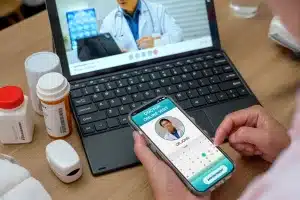

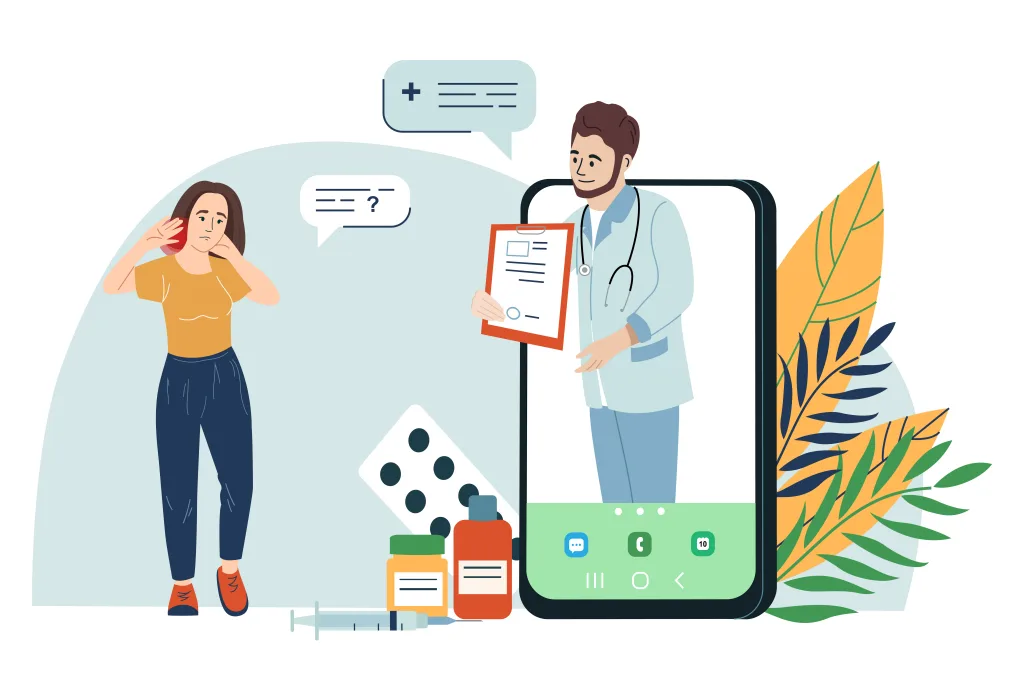
For years, the gold standard for clinical communication was the patient portal. But as any practice manager can tell you, getting a patient to remember a username and password just to check a lab result is a significant hurdle. Today, the most successful clinics have realized that the “portal” should be the device already in the patient’s hand.
Healthcare text messaging is no longer just a luxury for tech-forward offices; it is the backbone of modern clinical workflow. However, as the industry matures, there is a growing divide between basic EMR-integrated notifications and a dedicated patient communication tool that can actually handle the complexities of a busy practice.
The Limitation of EMR-Based Texting
Most EMRs offer a basic text messaging service. While convenient at first glance, these modules are usually “one-way” and siloed. This creates a bottleneck: the patient receives a text, has a question, tries to reply, and gets an automated “Do Not Reply” error. They then call the office, adding to the phone tag cycle.
By contrast, a dedicated two-way patient texting system like Doctoc treats the clinic’s phone number as a living communication hub. This allows for secure patient-provider texting where the patient feels heard, and the staff isn’t tethered to a phone line.
Internal Coordination: The Missing Link
We often talk about healthcare text messaging in the context of patients, but the internal benefits are equally vital. In a standard setup, a doctor needing to clarify a referral with an outside lab or a specialist often faces a maze of faxes and hold music.
Doctoc changes this by allowing staff and physicians to text with referring providers, labs, and imaging partners at no extra cost to either party. This creates an encrypted clinical communication loop where questions are answered in seconds rather than days. When a physician texting app is integrated into the daily routine, the speed of care accelerates, and clinical burnout decreases.
Why Healthcare Text Messaging Matters
- Patient Engagement via Text: Over 90% of patients read a text within three minutes, compared to fewer than 20% who check voicemails. This immediacy makes text-based healthcare notifications the most effective way to reach patients.
- Internal Coordination: Clinics benefit from encrypted clinical communication among staff, physicians, and referral partners, ensuring sensitive information remains secure.
- Operational Efficiency: SMS reminders to reduce no‑shows directly improve revenue and patient compliance.
The Doctoc Advantage: Real-World Clinical Utility
Based on the Doctoc framework, there are three specific areas where dedicated software outperforms generic tools:
- Just-in-Time Reminders: General reminders are easy. Clinical prep is hard. Doctoc offers customizable, “just-in-time” bowel prep reminders for GI procedures or specific pre-op instructions. Sending a text at exactly 6:00 PM when a patient needs to start their prep is more effective than a printed sheet given to them two weeks prior.
- Auto-Routing for Efficiency: Not every text should go to the front desk. Doctoc’s auto-routing ensures that billing questions go to billing and clinical questions go to the nurse’s station. This keeps the workflow moving without a manual “gatekeeper.”
- Seamless Documentation: A common fear with a third-party HIPAA texting platform is that data won’t end up in the chart. Doctoc bridges this gap with EHR-integrated texting via HL7 or a simple one-click “cut-and-paste” to the EMR, ensuring the medical record remains the single source of truth.
Security and Compliance are Non-Negotiable
You cannot use standard SMS for medical advice. To meet HIPAA texting guidelines, the platform must provide end-to-end encryption. Using a HIPAA-compliant patient text messaging service ensures that PHI (Protected Health Information) is never exposed to unauthorized eyes.
Furthermore, clinics must be wary of TCPA regulations. Using a professional secure text messaging for healthcare platform ensures you have the proper opt-in/opt-out protocols in place, protecting the practice from litigation while maintaining patient engagement via text.
Closing the Gap on No-Shows
Revenue in a clinic is tied to the schedule. A secure appointment reminder text service for clinics is the most effective way to protect that revenue. By utilizing an automated patient outreach service, clinics see a drastic reduction in gaps in the day. These SMS reminders to reduce no-shows pay for the software many times over by simply ensuring the doctor’s time is utilized.
The Bottom Line
If your clinic is still relying on the “automated” one-way texts from your EMR, you are likely missing out on significant efficiency gains. Transitioning to a healthcare text messaging platform that supports secure mobile messaging for patients and internal collaboration with referral partners isn’t just a tech upgrade—it’s a better way to practice medicine.
By removing the friction of the patient portal and the frustration of the telephone, tools like Doctoc allow providers to get back to what they do best: caring for patients.